Showing posts with label princess. Show all posts

Tuesday, September 11, 2012

Intertextuality Shrek


In the movie Shrek perhaps the entire movie is a giant example of intertextuality. The movie Shrek is a mixed up fairy tale, the ogre ‘Shrek’ (Mike Myers) who is usually a bad guy is the main character or in a fairy tale sense our “prince charming”. On the other hand our prince charming in the movie is the role of the bad character. Through out the movie there are countless references to other fairy tales; From the gingerbread man, to the three little pigs,  Pinocchio, Cinderella, Snow White, Mirror on the wall, and even in the later movies of the Shrek series the fairy godmother. Then we have a quest of the main character, which is to rescue the princess “Fiona” (Cameron Diaz), who ironically also becomes an ogre after finding her true love (Shrek), from a fire surrounded dragon protected tower of a castle. I feel like the entire movie is based off of the idea that it doesn’t matter what you look like. So, rather than the handsome young lad landing the gorgeous princess, the ogre gets the ogre chick. It showed that sometimes the princesses charming prince comes in the appearance of an ugly ogre with a good personality rather than vise versa. They completely went the opposite of fairy tale by mixing up the roles. Rather than taking a courageous dog or white stallion as his companion, Shrek the main character has a talking Donkey played by the voice of Eddie Murray, who is constantly showing his clumsy fearfulness. Also in the movie, you hear the saying “you and what army?” when Shrek is confronted by the knights attempting to arrest him. This same line appeared many times before, I can specifically recall Angelica of the Television show ‘Rugrats’ saying the same thing to Suzie, while having a confrontation. The movie is an excellent rendition of a fairy tale and also fun for all ages to watch.

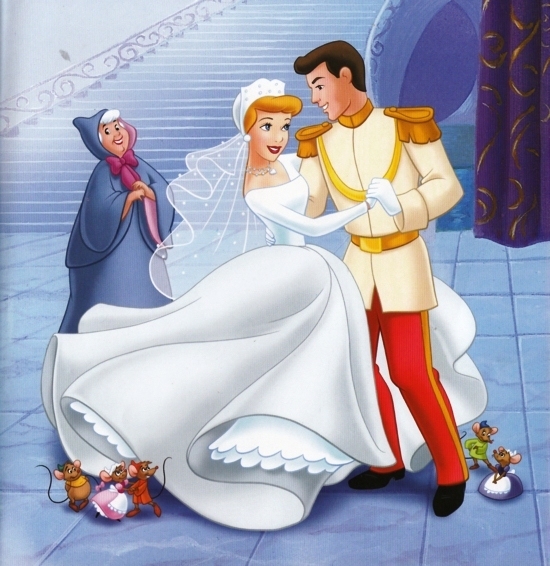
Intertextuality: Cinderella


Intertextuality plays an important role in literature as it helps readers compare two texts.  The texts can vary from having the same theme and details, to having only one thing in common that can be pulled out and compared.  Overtime, numerous amounts of texts begin to carry out similar ideas and these can easily be compared.  When comparing the texts, there seems to be a conversation going on between the two.

Cinderella and Prince Charming
When I was a little girl I grew up watching Disney’s Cinderella.  As the years went by I began to notice other versions of the same movie, some with direct similarities, and others with a completely different plot.  My favorite version was A Cinderella Story starring Hilary Duff.  It was the same story set in a modern time period; similar to the things we are used to seeing.  When I began to learn more about myths and fairytales, I came to find out that this same story was being told a long, long time ago, although it did not have such a happy ending in the original versions.

By having different versions of the same text, the audience is able to choose what they like and do not like, sort of creating their own story.  Also, having various versions can make understanding the text more interesting when it is compared.  The story of Cinderella will stick with me forever, all of the details and characters, and no matter what text I get into in the future, having this solid background helps in every way.  I’ll always have something to compare new texts to.

If I were to choose another text to compare Cinderella to it would be The Princess Diaries.  In the beginning of the two stories, the main characters start off as average girls who are not given much attention as they live their daily lives.  Throughout the middle they go through extreme makeovers making them more noticeable, and at the end both girls become princesses and everyone loves them.  Seeing the magic appear in both stories makes me so happy!  It’s always a nice and motivating idea to think about, reminding the audience that anything is possible.